Why You Feel Overwhelmed All the Time (and Why It’s Not Your Fault)
If you’ve ever wondered, ‘why am I always overwhelmed?’, you’re not alone. Overwhelm comes for us all now and then, even when we’ve been managing everything and keeping the wheels moving.
I see it with many women. Thoughtful, capable women just doing their best and keeping up with the pace of everyday life yet always overwhelmed or feeling off.
If you’re one of these women that feel this constant overwhelm or chronic stress even when there is nothing ‘wrong’, firstly you are not alone, and secondly I hope this post helps shed some light for you.
It doesn’t always have to be a big, dramatic thing that everyone notices. In fact, it’s often behind the scenes, you might even be hiding it from yourself, and you didn’t even know it.
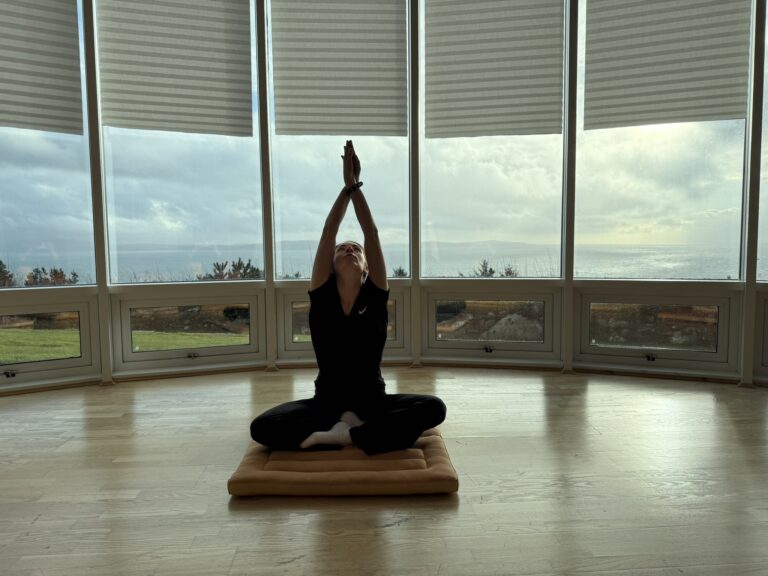
Even when it is time to relax and settle down, maybe by doing a yoga class or meditation – you just can’t seem to rest. You are still thinking about that to do list, or your mind won’t stop wondering in your downward dog.
We tend to make things even harder for ourselves by blaming ourselves for not managing well enough, not coping the way we ‘should’ be. As if it isn’t hard enough just dealing with the overwhelming sensations in our bodies, we start to turn on ourselves then too.
So what’s happening? Our bodies are fried, but functioning. They need a break, but they don’t know how to switch off after being in overdrive for so long. It’s actually a sign that your body has been under sustained demand for too long. Let’s try to understand what that entails.

So Why am I Always Overwhelmed? Understanding Your Nervous System
Our nervous system has two sides – the fight or flight mode and the rest and digest mode. It is normal for your nervous system to fluctuate between these modes as we go through stressful moments throughout the day. The body responds, recovers and returns to that rest and digest state – or so it should.
But many of us find ourselves constantly stressing over things. Relationships, work, mental load or family responsibilities – it all adds to stress and anxiety at a low, chronic level just lingering in our nervous systems.
The body soon learns to adapt as it always does – and it does so by constantly staying alert. Wired on to deal with any stress coming its way. The fight or flight mode or, the sympathetic nervous system – is not meant to be activated constantly. Yet this is what happens for many of us through the stress of day-to-day life.
With this as your default mode, you feel it as tension, urgency, no patience left, racing or negative thoughts. Even when you try your best to turn off and do a meditation or something restful, you find it challenging to just rest and be.
For me it comes up as lack of decision making. My mind would run circles at night trying to just pick a decision and move on, but it wouldn’t be long before it would come back to me nitpicking once more.
It can be that you’re annoyed or deflated even with nothing or no one is around.
Or you might have physical symptoms like gut issues, acne, headaches or back pain.
Many of us notice something is off when we can’t relax even when we try. We feel restless while sitting, irritable as our baseline, always fatigued or just getting through the day – fight or flight mode in full force.
This usually signifies that our body just isn’t used to getting enough signals to turn properly rest. It doesn’t remember how to switch into safe mode regularly, and it is far easier for it to stay in this adapted state of constant alertness (overwhelm).
This is ok, your nervous system is just trying to protect you, and you are doing the best you can.
Why “Trying to Relax” Doesn’t Work
You might start getting frustrated over time, trying to tell the body to calm down by going to the yoga class or meditation and it just not working. You are still up all night overthinking or feeling stressed.
It’s because the body responds to patterns, unfortunately not by getting orders from the brain. It is far too used to being in a state of stress, so by us telling it to stop that now, well it doesn’t work too well.
We need to work with the body and support it, rather than telling it what to do.
I’ve seen through working with women that once they reconnect with themselves, using the breath and mindful movement practices, there comes a shift pretty quickly.
It might be their sleep first, getting better quality and waking up feeling fresh. Then it is their energy levels, starting to notice the difference throughout the day. Next could be their mental state, noticing more moments of flow and less monkey mind at play.
These are all cues that your nervous system is slowly starting to settle back into rest and digest. It is starting to feel safe again, and you feel the difference.

Where Breathing Fits In (Gently)
And this is where breathwork for overwhelm and functional breathing techniques come in.
We have a direct influence over our nervous system by how we breathe. And this is great news.
By learning how to breathe in a way that signals to your nervous system you are safe, you can relax now, come back to rest and digest mode, the body learns through action how to calm down.
This is way more effective than just telling it to calm down. And thankfully, it’s even less effort than having to go to a yoga class or another thing on your to do list.
You can just come back to your breath throughout the day and use it as that signal to your nervous system to relax.
I have seen this over and over again working with women and guiding them through breathing practices. It’s amazing how fast you can start feeling better from breathing better.
When we experience stress or anxiety, our breathing patterns change very quickly to dysfunctional breathing.
This can be shallow, chest breathing, mouth breathing, fast breaths, or even holding our breath without knowing it.
Our body is just responding to the stress it is dealing with and that is ok.
But small, gentle changes in breathing can act as a physical cue that the demand has eased, and we can now rest. Even just briefly.
This is why breathing practices can feel helpful when thinking strategies don’t seem to work. They meet the body where it is, rather than asking it to behave differently.
The intention here isn’t to “do breathwork properly” or to create immediate calm. It’s to offer moments where the body isn’t being pushed or managed. Just giving it space and time to ease it’s way back to a state of calm naturally.

A Simple Place to Start
So if you are curious, this is a good place to start focusing on your breathing. Try this and start simple, start small.
Once or twice today, pause and notice your breath without changing it. Then, if it feels comfortable, allow the exhale to soften, slowing it down – just enough to feel a small sense of release. And enjoy that feeling. That long, slow exhale really calms your system and helps you relax.
There’s nothing to achieve here. No rhythm to follow. No rules to uphold. No outcome to reach.
Think of it as giving your body a brief moment where nothing is required, and just try to connect with your breath, and connect with your body through the breath.
Over time, these small moments can and will add up.
Let’s Support Each Other Moving Forward
Overwhelm isn’t something you reason your way out of. It’s something the body needs help easing out of — gradually and without pressure. Breathing, and mindful movement help the body do that.
If you want a bit more guidance I created a free Mini Ritual Reset for Overwhelm as a gentle entry point. It offers seven days of short breathing practices, simple movement, and space to reflect — designed to fit into real life, not disrupt it.
If your body has been living in ‘on’ mode for a long time, consistency and gentleness matter more than intensity — which is exactly what this mini reset is designed for.
There’s no expectation to feel different right away. It’s simply a structured way to begin offering your body something it may not have had in a while: consistency, simplicity, and a little room to settle.