Why Breathwork Is So Powerful: Benefits for Burnt Out Women

Everyone is talking about breathwork these days. If you do a quick search, you’ll find plenty of articles explaining the science behind it and why it works. But here, I want to talk about why breathwork is so powerful, and how you can use these benefits. As a stressed-out woman juggling home, work, motherhood, or all of the above. Let’s bring these benefits of breathwork into our lives in a way that makes sense, effortlessly.
As women, we’re pulled in so many directions. Some days it’s hormones, some days it’s kids, some days it’s the mental load that tips you over. So why is breathwork so powerful? For us, it can be used as such a useful tool when we need it most. It’s quick, effective, and can instantly shift how you feel — whether you’re having one of those chaotic mornings or just feeling drained for no clear reason.
Even with small, consistent habits, breathwork can change how you feel from the inside out.
And that’s when you’ll really start to feel its power — when your breathing practice becomes something that makes sense and fits your life.
The Science Behind Why Breathwork Works
Our breathing directly influences our autonomic nervous system — the part that controls stress and relaxation. Think of breathwork as a remote control for your body’s settings.
When you breathe quickly from your chest, your body switches into “fight or flight.” When you slow your breath and focus on your belly, you activate “rest and digest,” the state where your body feels safe and calm.
For a busy mother or professional woman, this means you can literally use your breath to switch off the stress response — even if you only have five minutes.
Try this:
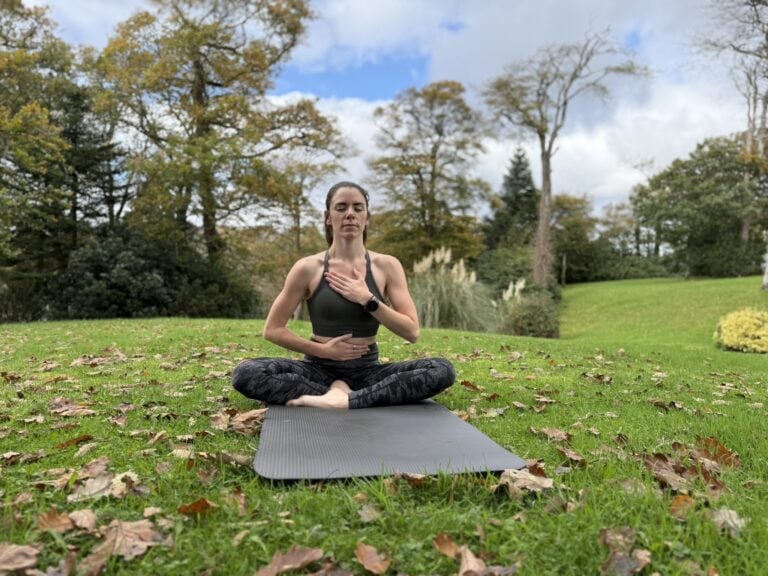
- Belly breathing: Place your hands on your belly and feel it expand as you inhale. Breathe slowly through your nose and exhale gently through your nose.
- Slow breathing: Inhale for four counts, exhale for six. The longer exhale helps you drop into calm.
- Humming breath: Repeat slow breathing, but hum gently as you exhale. The vibration soothes your mind and activates your vagus nerve, helping your body unwind. You can even put your hands over your ears and eyes to close off the outer world and turn inward. Feel the vibrations even more. Repeat 5 times.

Breathwork Benefits and How They Can Help You
Calm Your Nervous System – Stress + Anxiety Relief
As women, our cortisol can spike all day long — between deadlines, tantrums, and multitasking. Breathwork helps bring it back down. Slow breathing reduces cortisol and blood pressure almost immediately, helping you find your center before the next wave of chaos hits.
Try:
- Box breathing (inhale 4, hold 4, exhale 4, hold 4)
- Alternate nostril breathing
- 4-7-8 breathing before bed
These are some simple ways to lower cortisol and blood pressure, with immediate effect.
Sharpen Focus and Mental Clarity
Sometimes our minds can feel scattered from constant multitasking, especially after a rough night sleep. Controlled, mindful breathing really helps to restore focus, and reoxygenate the mind.
Taking just two minutes of slow, balanced breathing before starting work or a difficult conversation can improve concentration and decision-making.
Practicing Buteyko or Oxygen Advantage breathing techniques helps a lot with mental clarity, focus and blood circulation getting oxygen to where it’s needed.
Buteyko Breathing (for Calm Focus)
Sit comfortably and breathe gently through your nose only. Inhale lightly for 2 seconds, exhale slowly for 3–4 seconds. Keep your breath soft, quiet, and steady. Pause briefly after each exhale before the next inhale. Continue for 2–5 minutes.
You should feel calmer and more focused — like pressing the reset button on your mind.
Oxygen Advantage (for Energy + Mental Clarity)
Breathe in gently through your nose for 2–3 seconds, then exhale slowly for 3–4 seconds. After the exhale, pinch your nose and hold for a few seconds until you feel a light air hunger. Release, breathe normally, and repeat for five rounds.
This simple exercise boosts focus, energy, and oxygen efficiency — ideal before work, meetings, or busy days.
Improve Sleep Quality
Quality sleep can feel like a luxury, especially for mothers. Breathwork supports deeper, more restorative rest by calming your nervous system and improving oxygen flow.
Before bed, try 4-7-8 breathing — inhale for 4, hold for 7, exhale for 8 — to relax your body and prepare for sleep. You will feel ready for a lovely restful sleep after a couple of rounds. Fingers crossed the kids will stay asleep too.
Boost Energy Naturally
Our energy – another incredibly valuable asset for us. God knows we need plenty of it with unpredictable little kids racing around the place. When your energy dips, instead of reaching for caffeine, try energizing breathwork. Fast, rhythmic breathing increases oxygen and safely stimulates your system.
Here are some great techniques for doing just that:
Breath of Fire – a rapid, rhythmic breathing technique through the nose that energizes the body, clears the mind, and boosts circulation. It’s great for shaking off fatigue and reigniting your inner strength.
Right nostril breathing (sun breathing) – creates heat in the body, stimulates and awakens the prana energy in us. It activates the sympathetic nervous system and builds alertness.
Alternate nostril breathing – also known as energy purification breathing – can be used to release toxins, get oxygen into the body, and release carbon dioxide.
Ujjayi breath – a slow, oceanic-sounding breath practiced through the nose with a gentle throat constriction. It helps build focus, balance energy, and anchor the mind during stress or movement.
Breath retentions (kumbhaka) – also using energy locks called bandhas – can be used to control the prana or flow of energy in us, leaving us feeling alert and centered.
Process Emotions and Prevent Burnout
Breathing deeply can also connect the mind and body, which is proven to release stored tension.
You might not think it, but with all the running and racing around, sometimes you might forget to stop and take a breath. You might be storing emotions instead of releasing them simply because you haven’t given yourself time to process. Life can move fast some days.
But breathwork gives you that opportunity, to release unwanted emotions or things no longer serving you.
Strengthen Lung Function and Immunity
If you feel like everyone around you is getting sick, breathwork can support your immune and respiratory health. Nasal breathing increases nitric oxide, which protects your airways and boosts immunity.
By doing nasal breathing techniques that boost your nitric oxide intake, you are protecting yourself from bacteria and boosting your immunity.
If you find yourself in sedentary jobs, it’s even more important to have healthy routines that can help you fight off colds and flu.
These breathing techniques have been proven to increase nitric oxide levels:
- Belly breathing
- Box breathing
- Nasal slow breathing
- Buteyko Breathing
Support Hormonal Balance and Heart Health
By lowering stress hormones and improving heart rate variability, regular breathwork helps balance your body’s systems — which is especially helpful when hormones are fluctuating due to stress, menstrual cycles, or perimenopause.
Try to start your day from bed with some mindful breathing, or finish off your day in bed with a couple of intentional breathes. This is a great way to effortlessly build a breathwork routine.
Create Mind-Body Awareness
Breathwork helps you tune into your body’s signals before they become full-blown burnout. Cold hands, racing mind, poor sleep — your breath can bring those signals to light and help you respond with care instead of pushing through.

How to Use These Benefits in Your Favour (Even If You’re Busy)
We know breathwork works — but how do you make it part of real life? Here are a few quick ways to weave it into your day:
1 minute fixes:
- Before getting out of bed: box breathing
- While making coffee or lunches: slow, coherent breathing
- Driving to school or work: light, gentle nose breathing
- Before a meeting or pickup: energizing breath or short breath holds
- In the shower: humming breath
- Watching tv or in bed: 4-7-8 breathing
You know your own rhythm — find little pauses in your day and use them. Breathwork doesn’t need to be another item on your list; it can be the thing that makes the list feel easier.
How to Build a 5-Minute Daily Practice
If you want to go deeper, start small with five minutes a day. My Functional Breathing Cheat Sheet is a great place to begin — it helps you master the basics before layering in advanced techniques.
Functional breathing is the foundation. Without it, our daily breath keeps us in a mild fight-or-flight mode. Once you’ve built this base, you can add more advanced breathwork confidently.
All about Intention
The science is clear — but the real change happens when you bring intention into your breath. Slow down. Close your eyes. Feel your breath and heartbeat. That’s where calm begins.
This simple awareness can ripple through your whole day — and your whole household.
Don’t forget to grab the Functional Breathing Cheat Sheet to get started right. And if you’re curious about safety, read next week’s post on When Not to Do Breathwork.