Overbreathing: How to Recognize and Reset Your Breathing Pattern
If you’ve been feeling wired, tense, easily overwhelmed, or like you can’t quite catch a full, satisfying breath, you might be dealing with overbreathing. It’s incredibly common for stressed or burnt-out women — especially those juggling work, motherhood, or a thousand invisible responsibilities — and most people don’t even know they’re doing it.
I see this all the time in people of all ages and backgrounds, and I’ve experienced it myself. As a breathwork coach (and through my freediving background, where functional breathing literally determines how long you can stay calm underwater), I’ve learned just how much your breathing pattern can affect your mood, energy, sleep, and even how grounded you feel in your day-to-day life.
If you’re someone who feels like you can never get a good breath, always sighing or yawning and maybe quite fatigued everyday – this post might be for you.
Here’s what you’ll take away from this post so you can get what you need quickly:
• how to identify overbreathing in your everyday life
• the symptoms it can cause (including the subtle ones most women miss)
• simple, doable ways to reset your breathing so your body feels calmer and clearer
Alright, let’s get into it gently and in a way that makes sense — no complicated science talk, just real advice you can actually use.

What Is Overbreathing?
Overbreathing (or subtle hyperventilation) simply means you’re breathing more than your body needs. It might look like:
- breathing in too much air
- taking fast, shallow breaths
- mouth breathing instead of nasal breathing
- upper-chest breathing instead of using your diaphragm
When this happens, you breathe out too much carbon dioxide, which throws off the chemical balance inside your body. Even though “more oxygen” sounds good, it actually becomes harder for your cells and brain to use that oxygen properly when CO₂ levels drop too low. This imbalance can make you feel off — mentally, emotionally, and physically.
But isn’t hyperventilation used in some breathwork practices?
Yes — certain practices like holotropic breathwork, circular breathing, or rebirthing deliberately use controlled hyperventilation to release emotions or access altered states. But these are structured, intentional, and time-limited.
Everyday, unconscious overbreathing is different — and that’s the one that can quietly impact your well-being over time.

Common Ways We Overbreathe
Especially for women carrying a lot of mental load, overbreathing often slips into daily habits without us noticing. It can look like:
- frequent mouth breathing
- chest or upper-body breathing
- sighing often
- fast breathing during moments of stress, anxiety, or rushing
Most women think they’re “just tired” or “just stressed,” when in reality their breath is feeding the stress loop.
What Happens When We Overbreathe?
Overbreathing flips your system into the sympathetic (fight-or-flight) response far more often than it needs to. Over time, this can lead to:
- more mental spiraling and ruminating thoughts
- cold hands and feet from poor circulation
- less oxygen reaching the brain
- weakened diaphragm and even more upper-chest breathing
- a constant feeling of being on edge
- poor sleep, mood dips, low energy
- increased anxiety and stress
- difficulty focusing or thinking clearly
It becomes a cycle: the more you overbreathe, the more stressed your body feels — and the more stressed you feel, the more you overbreathe.
How to Counteract Overbreathing
The good news? Your breathing patterns can be retrained gently, one step at a time. Here are supportive ways to bring your breath back into balance:
Nasal Breathing
This is the most foundational shift. Breathing through your nose filters the air, slows your breathing, and helps restore healthy CO₂ levels.
Diaphragm or Belly Breathing
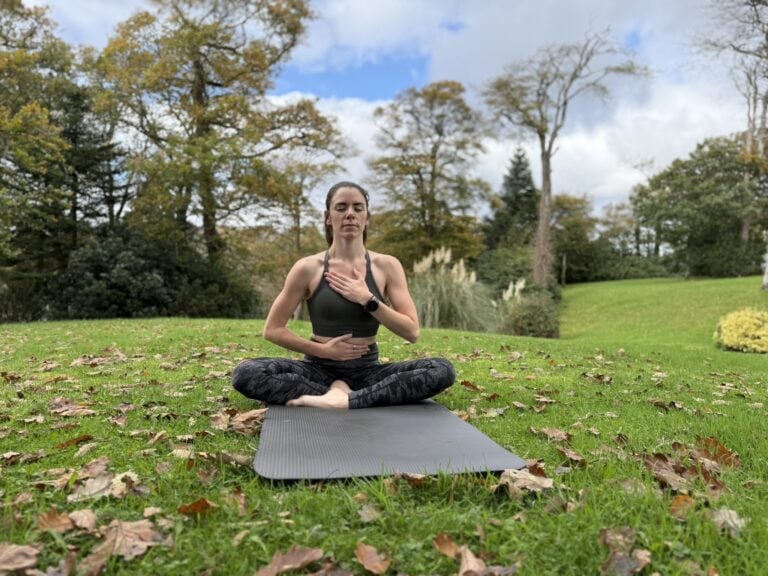
This encourages a calm, grounded breathing pattern that supports the nervous system and strengthens the diaphragm.
Breath Retention Practices
Gentle retentions help build carbon dioxide tolerance and reduce the urgency to over-inhale.
Pranayama Techniques
Simple yogic breathing practices can help regulate your rhythm and create more balance.
Check Your BOLT Score
A quick, practical way to assess your baseline functional breathing and see where you might need support.
Use my Functional Breathing Cheat Sheet
It breaks down the most important steps to shift from overbreathing into a calmer, more sustainable breathing pattern.
Why This Matters — Especially for Women
Functional breathing makes an enormous difference in how you feel day to day. When you breathe well, you’ll likely notice:
- deeper, more restorative sleep
- better mood and emotional stability
- more energy, clarity, and focus
- warmer hands and feet from improved circulation
- fewer headaches and less congestion
- improved heart and cardiovascular function
- more confidence, groundedness, and ease
- better breathing patterns during exercise
- and an overall improvement in your quality of life
When your breath supports you, everything else becomes more manageable — especially when you’re carrying a lot.
If you are interested in learning more about functional breathing or would like to work with me 1:1, feel free to reach out and remember to download my free functional breathing cheat sheet here. There are lots more resources on breathing and breathwork in my blog for further reading too.
About the Author

Elaina helps high-performing women who feel burned out reconnect with their bodies, minds, and breath. A somatic movement and breathwork guide, she teaches practical tools to release tension, reduce stress, and cultivate more energy and presence in daily life. Through 1:1 sessions, online programs, and free resources at Freedom in Life, Elaina empowers women to move, breathe, and thrive with ease.